

Laurence Amand Laurence Amand Dentistry · Orthodontics · Sleep apnoea
· ·
Make an appointment
Dr. Laurence Amand smiling, outdoors in daylight

Laurence Amand

Specialist dental care, personally guided.

Krabbosstraat 71 1653 Dworp Belgium

A healthier smile
for a better life.

Smile.
Your teeth are in good hands.

Every treatment is personally guided from start to finish, with clear advice, up-to-date techniques and high-quality materials.

Laurence Amand

Experience.
Care. Commitment.

Laurence Amand graduated magna cum laude from the VUB in 1995 and has since developed extensive experience in dentistry and orthodontics, with particular expertise in treating children and adults and in oral appliance therapy for sleep apnoea.

Consultations are available in Dutch, French and English at the practice in Dworp.

More about her work  →

01

Dentistry

Personalised care, built on dialogue.

Every treatment begins with listening. You receive clear explanations and a treatment plan tailored to your needs, with carefully selected materials. From prevention to restorative care, every step is personally followed from start to finish. When specialist care is needed, you are referred to the appropriate colleague.

  • Check-ups & prevention
  • Conservative & aesthetic dentistry
  • Personal follow-up from start to finish
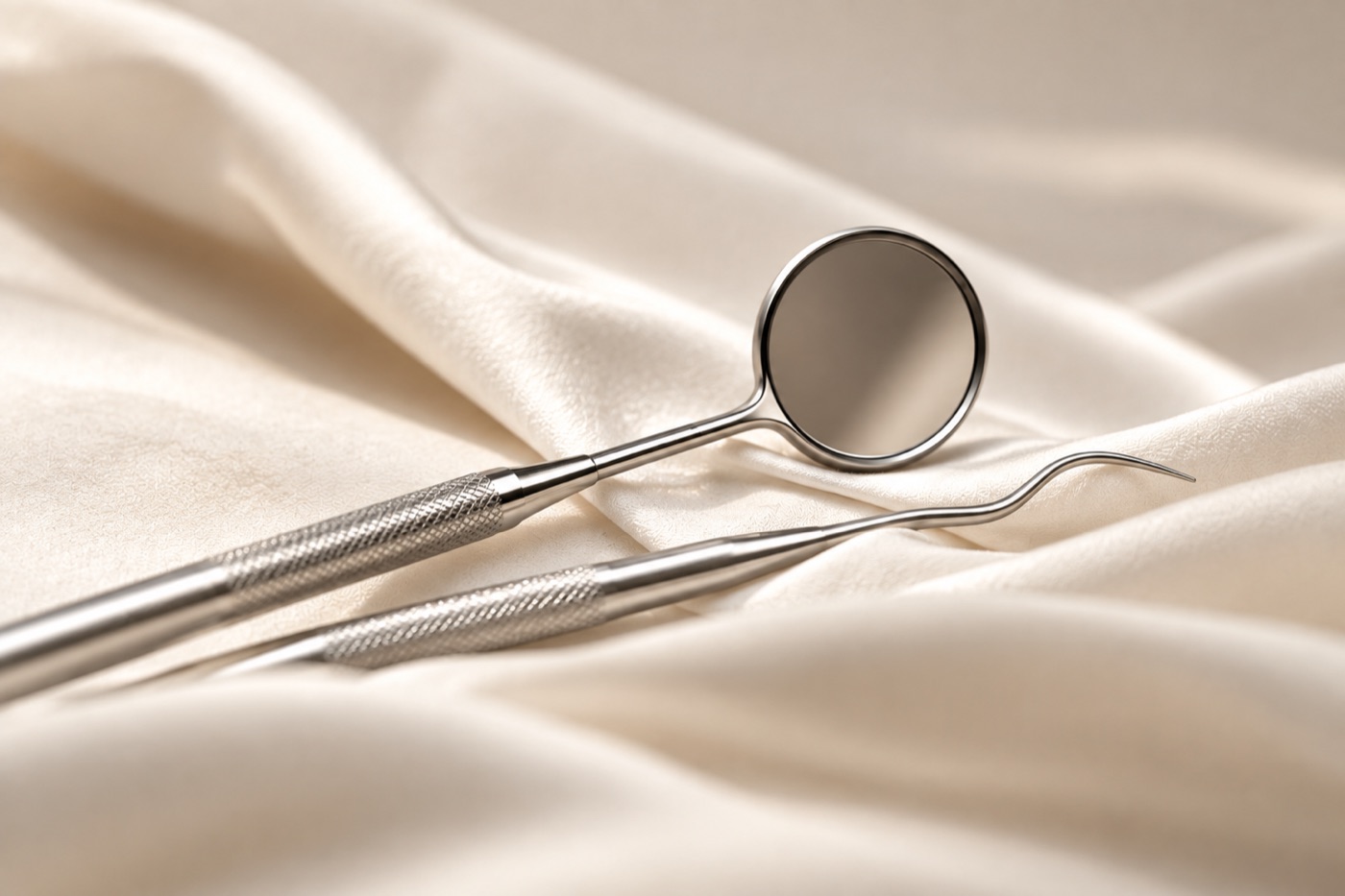
Dental mirror and probe on silk fabric

Practical notes

Before your visit

New patients are always welcome. Appointments can be arranged directly by phone. Consultations are available in Dutch, French and English.

After your treatment

Every treatment is followed personally from start to finish. Questions after treatment are always welcome.

When you need help

In case of an urgent problem, call the practice directly during opening hours.

After an extraction

The following instructions are intended to support healing. Some discomfort and swelling are normal after an extraction.

  • Keep gauzes in the mouth for an hour or two with firm pressure, replacing them every half-hour as needed.
  • Always keep your head elevated.
  • Apply ice to the cheek at regular intervals (20 minutes every hour).
  • If you are bleeding, bite on a gauze or a humidified teabag for 20 minutes.
  • Blood-tinged saliva is a normal post-operative effect.
  • Limit physical effort and rest.
  • Do not dislodge the blood clot that has formed in the socket; it helps healing.
  • Do not eat anything until the bleeding has stopped.
  • Avoid drinking through a straw.
  • Do not rinse your mouth or spit.
  • Avoid smoking or drinking alcohol.
  • Do not eat hard foods.
  • Avoid brushing near the extraction site for the first 72 hours.
  • If you experience pain, take the medication prescribed to you.
  • If antibiotics were prescribed, continue taking them for the full period, even if the symptoms go away.
  • Eat only soft foods or warm liquids on the day of the extraction, and resume your usual diet as soon as you are able.
  • Rinse your mouth three times a day with warm water and salt (half a teaspoon of salt in a cup of water).
  • Brush and floss every day for better long-term results.
  • Avoid brushing near the extraction site for the first 72 hours.
  • Avoid hard foods (nuts, candies, ice).
  • Pronunciation difficulties and extra saliva are normal; everything returns to normal within a week.
  • Bruising may appear on the skin and will fade after five to seven days.
  • Difficulty opening your mouth should return to normal after four to five days.
  • If after three days the pain increases instead of decreasing, call us.

After a few days you will feel better and be able to resume your normal activities. If bleeding, pain or swelling persists after two or three days, or if you react to the medication, call the practice.

02

Orthodontics

Straight teeth, at every age.

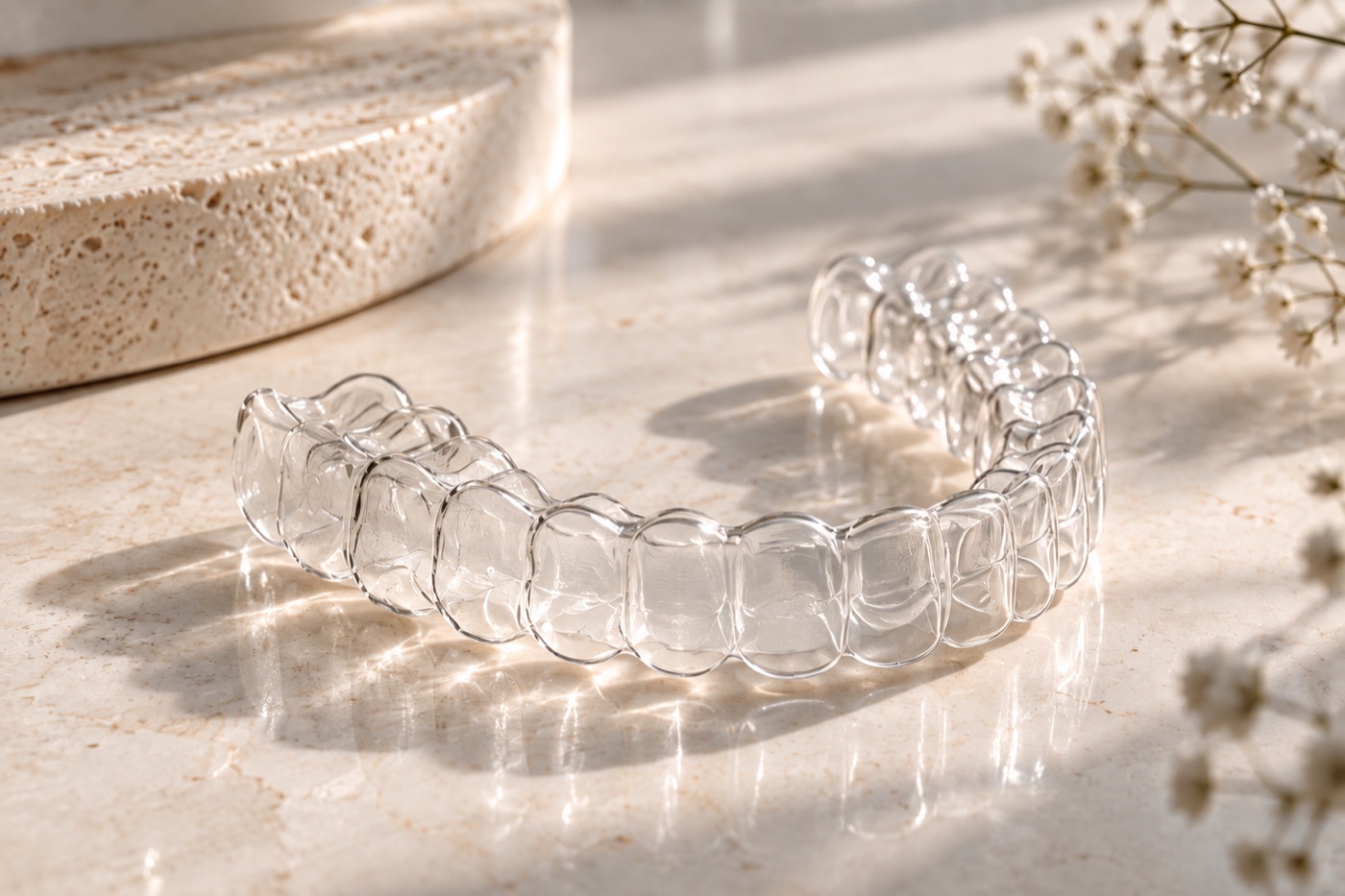
Orthodontic treatment is available for children, teenagers and adults. Depending on the individual situation, treatment may involve removable appliances, fixed metal or tooth-coloured braces, or invisible solutions such as TrioClear aligners. With advanced training in orthodontics, Laurence personally plans and follows each treatment.

Removable appliances · Fixed appliances · Functional appliances · Invisible aligners

  • Fixed & removable appliances
  • Invisible aligners · trioclear.be
  • Children · teenagers · adults
Clear orthodontic aligner on travertine

Your orthodontic journey

  1. 01 Consultation A first conversation about your teeth, your smile and what you would like to achieve.
  2. 02 Assessment An examination of the teeth, jaws and bite to understand the full picture.
  3. 03 Treatment plan A personal plan, explained clearly before anything begins.
  4. 04 Active treatment The chosen appliance, checked and adjusted at regular visits.
  5. 05 Retention After treatment, a retainer keeps the result in place.

Every orthodontic treatment is planned and followed personally, from the first consultation to the retainer that keeps the result in place.

Patient information

Questions patients often ask

Treatment time varies from one patient to another and depends on the individual situation. Some treatments take only a few months, while others require longer, sometimes several years. As a general indication, orthodontic treatment often takes around 15 to 24 months.

Once active treatment is complete, a retainer is used to help your teeth remember their new position. Depending on the situation, this may be removable or permanently attached behind the teeth.

Wisdom teeth do not necessarily affect a straight smile achieved through orthodontic treatment. In some situations, however, their removal may be recommended for the overall health of the mouth.

A Rapid Palatal Expander is an orthodontic appliance used to widen the upper jaw and correct certain problems such as a narrow upper arch or crossbite. It can also help create space for permanent teeth. Treatment commonly involves wearing the appliance for approximately 6 to 9 months, depending on the individual case.

These explanations are general. For advice on your own situation, contact the practice.

03

Sleep apnoea

Restful nights, safer days.

Since 2017, Laurence has been a staff member at CHIREC and, more recently, at UZ Jette and CHU Namur, where she works within the OSAS teams. She works together with sleep physicians to identify patients who may benefit from oral appliance therapy.

  • Oral appliance therapy
  • CHIREC · UZ Jette · CHU Namur
  • Collaboration with sleep physicians
Pillow in soft morning light

Understanding sleep apnoea

Sleep apnoea is a sleep disorder in which breathing is repeatedly interrupted during sleep. Breathing pauses typically last around 10 to 20 seconds and may occur from about 5 to more than 100 times per hour. The frequency and severity differ from one person to another.

Symptoms

  • Loud snoring
  • Gasping for air during sleep
  • Waking with a dry mouth
  • Morning headaches
  • Difficulty concentrating during the day

Treatment

For selected patients with mild obstructive sleep apnoea, treatment options other than CPAP may include lifestyle measures, such as weight reduction and exercise, and a fitted Mandibular Advancement Device (MAD). This type of oral appliance moves the lower jaw forward and can help prevent the tongue from obstructing the airway.

An oral appliance is not suitable for every patient. Its use is assessed together with the sleep physicians involved.

Contact

Your visit.

New patients are always welcome.

For appointments, questions or urgent problems, please contact the practice directly by phone.

Monday–Friday · 8:00–18:00
Nederlands · Français · English

Navigation

A healthier smile for a better life.

Make an appointment